This guide concerns oblates who live outside the monastery, sometimes called secular or external oblates.
An oblate offers his or her life to God in association with a particular Benedictine monastery. The word oblation means offering. For an oblate, that offering takes shape amid the responsibilities already at hand: marriage or single life, family, work, parish, and neighborhood.
Subiaco Abbey describes oblation as a way of deepening the commitment made in baptism. Its oblates include Christian men and women, lay people and secular clergy. They remain in their own circumstances while learning to live the Gospel with the help of Saint Benedict’s Rule and the friendship of the monastic community. Subiaco Abbey: Our Oblates
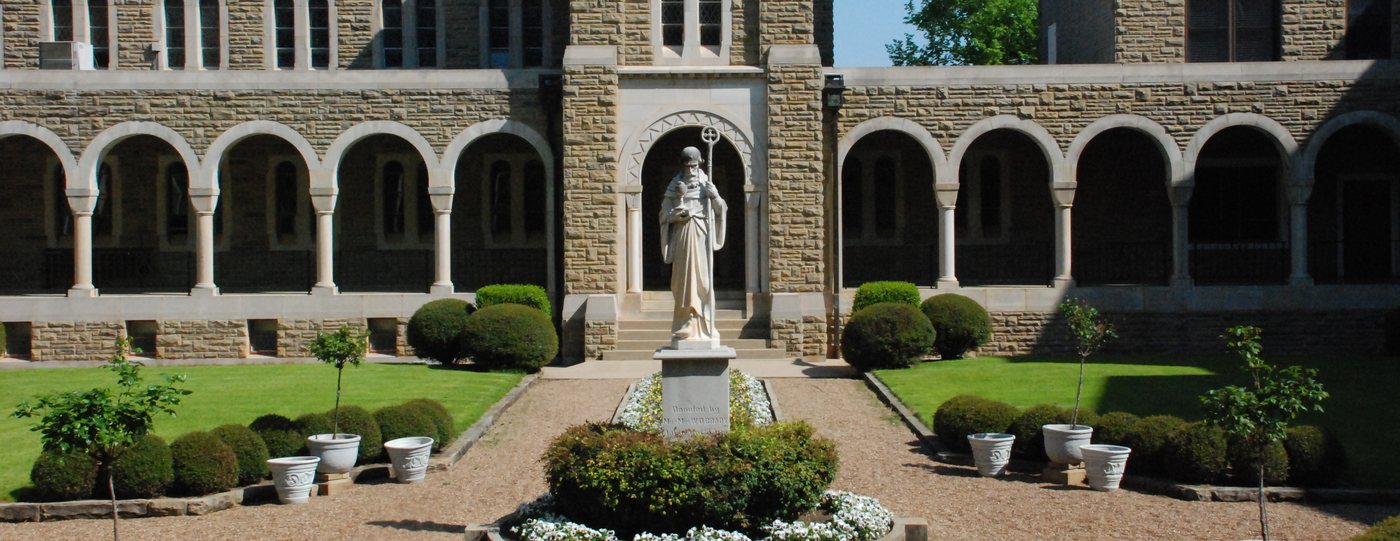
A commitment connected to a monastery
Oblation differs from monastic profession. An oblate does not become a vowed monk or nun by making an oblation. The commitment joins a person spiritually to a community and calls for a serious effort to live its Benedictine spirit. The Benedictine Sisters of Perpetual Adoration explain that oblates adapt monastic practices to their existing way of life and remain active in their own faith communities. What is an oblate?
That relationship matters. Getting to know a monastery means learning how its members pray, what work they undertake, and how they understand Benedictine life. A community’s particular character will help shape the life of its oblates.
What does an oblate do?
Daily prayer and prayerful reading of Scripture belong at the center. Reading the Rule gives an oblate a way to examine ordinary conduct: how we listen, use our possessions, welcome a guest, or respond when another person needs us. The Erie Benedictines describe prayer, work, study, family life, and leisure as places in which an oblate seeks God. Erie Benedictine Oblates
At Subiaco, oblates are encouraged to make time for the Liturgy of the Hours and lectio divina, the slow, prayerful reading of Scripture. The abbey also emphasizes faithfulness to the duties of one’s state in life. A parent caring for a child or a person meeting an honest obligation at work is already attending to responsibilities that an oblate’s prayer should deepen. Subiaco Abbey
Living the spirit of the three vows
The three monastic vows can also help an oblate examine daily choices. Stability might mean keeping a parish commitment when enthusiasm fades; conversion of life might mean giving up gossip and returning to a regular time of prayer. Obedience can take the form of hearing a fair correction and acting on it, with judgment and conscience intact. These are ways of practicing Benedictine values within one’s own circumstances; oblation does not make them monastic vows.
How to begin
Start with the oblate director of a monastery you would like to know. Ask whether the community is receiving inquirers and how its formation works. If possible, join the community for public prayer or attend an oblate gathering.
Preparation usually includes getting acquainted, studying the Rule, developing a regular prayer life, and discerning together whether to make an oblation. The names and length of these stages vary. The Benedictine Sisters of Perpetual Adoration, for example, describe about six months of inquiry followed by a year of candidacy with a mentor. They allow more time when needed. Their oblation process
Other houses follow different patterns:
- Saint Meinrad Archabbey sets a minimum age of 21 and describes a novitiate of 12 to 24 months, with lessons and personal reflection. Its requirements include baptismal documentation and a recommendation. Becoming an oblate
- The Benedictine Sisters of Erie describe a two-year formation process, including monthly online meetings and opportunities to visit. Their oblates make an annual promise. Formation · Commitment
These are examples, not a single set of requirements for every Benedictine house. Subiaco welcomes Christians of any denomination; ask the community you contact about its own eligibility requirements.
Before beginning, ask what prayer, meetings, visits, and ongoing formation will be expected. If you live far away, discuss whether the community can support a lasting relationship at that distance. Ask how the commitment is made or renewed, and mention any existing affiliation with another monastery.
You can begin reading the Rule and making a little space for prayer while you explore. A conversation with an oblate director is a good next step; there is time to learn before making a commitment.