Prayer through the day
The Divine Office is the Church’s daily prayer of psalms, Scripture, hymns, and intercession. It gives prayer a place in the morning, through the day, and as evening comes. Those who pray it join in the prayer of the Church, whether they gather in a monastery or parish, pray with their family, or follow the prayers alone with a book or an app.
The Psalms give words to familiar experiences of gratitude, grief, hope, repentance, and the need for help. Returning to them through the day brings our lives before God and draws us into prayer for others.
From the early Church to today
Prayer at regular times grew from the prayer of Israel and the practice of Jesus and the early Christians. Over the centuries, Christian communities developed patterns of prayer for different hours of the day and night.
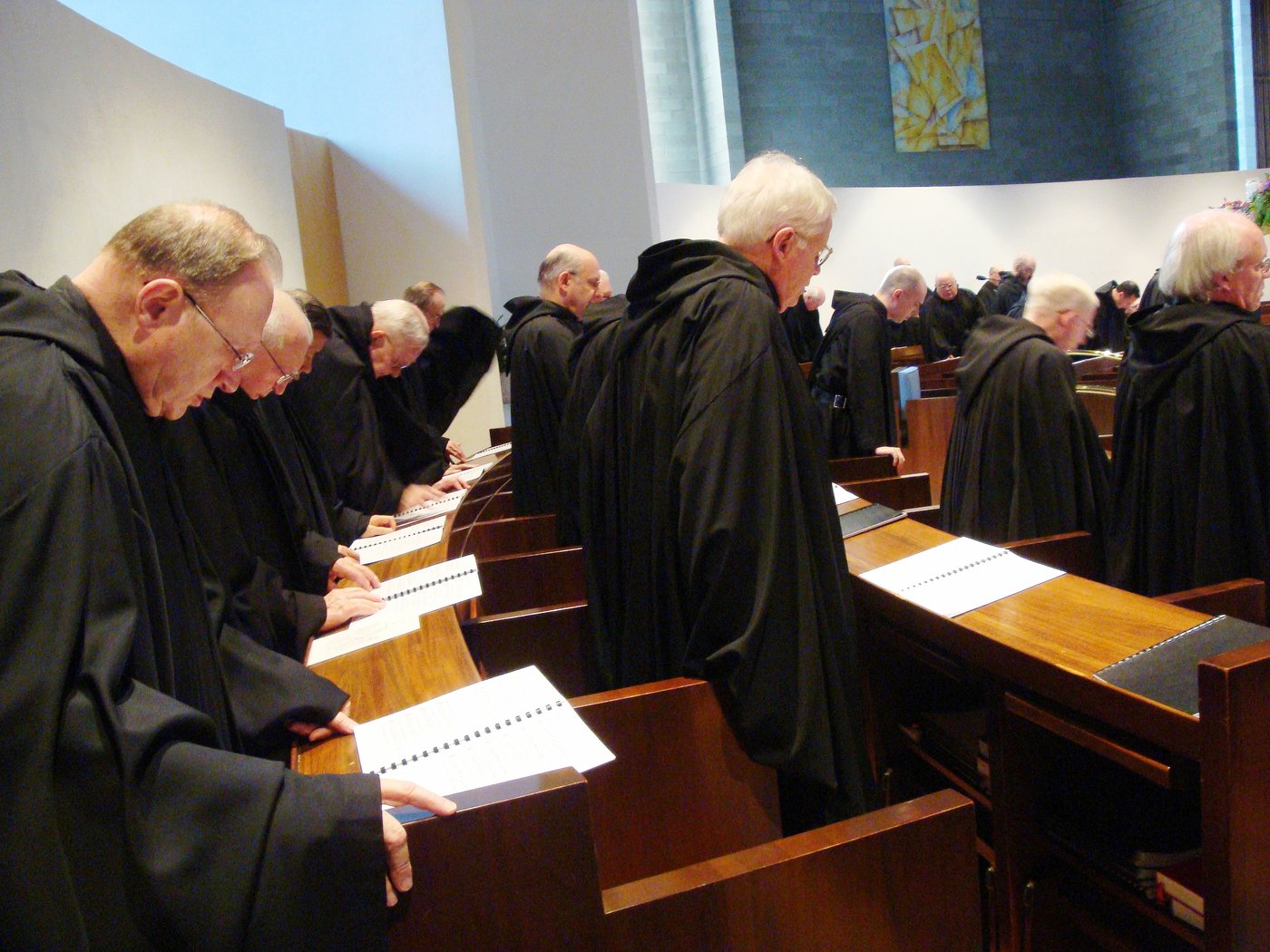
In the sixth century, Saint Benedict gave this inherited prayer a detailed place in his Rule. Chapters 8–18 arrange the community’s services and psalms. Chapters 19–20 concern the attention and reverence with which monks pray. In Chapter 16, Benedict quotes the psalmist’s words, “I have praised you seven times a day.” His pattern includes seven daytime services and a night office, with the Psalter prayed over a week. That pattern continues to shape Benedictine prayer, although communities today follow different schedules and arrangements. Read the Rule
Over the following centuries, the Office accumulated additional readings, hymns, and celebrations of saints. Books called breviaries gathered the texts for the Hours, supporting prayer both in community and by individuals. Different customs developed, and the books were repeatedly revised. In 1568, after the Council of Trent, Pope Pius V issued a Roman Breviary to bring greater consistency to the Latin Church’s prayer. Further reforms followed, including Pope Pius X’s reordering of the psalms in 1911. Paul VI’s account of the Office’s development (Italian)
The Second Vatican Council, a gathering of Catholic bishops from around the world held from 1962 to 1965, called for renewal of the Church’s worship and fuller participation by the faithful. For the Office, this meant restoring a closer connection between each Hour and its time of day, giving Morning and Evening Prayer particular importance, and encouraging lay people to join in. The revised Roman Liturgy of the Hours was promulgated by Pope Paul VI in 1970. The council’s teaching on the Office, 83–100
“Divine Office” and “Liturgy of the Hours” often name the same prayer. The latter is also the title of the revised Roman liturgical books. Benedictine communities have their own monastic forms and customs within this wider tradition. These are related expressions of the Church’s daily prayer, not two separate devotions. USCCB overview
Today, clergy, religious communities, and lay people continue this prayer in monasteries, parishes, and homes. Catechism, 1174–1178
The Office in monastic life
A monastery’s prayer schedule shapes the rest of its day. Work pauses so that the community can gather. Those who come to prayer bring different states of mind. Someone may feel grateful and attentive, while another is tired, worried, or distracted. They pray together regardless of those differences. Familiar psalms and the voices of others can help a person take part even when finding words or sustaining attention is difficult. Over time, returning to the Office teaches a steadiness that does not depend entirely on how one feels that day.
Benedict calls this prayer the Opus Dei, the Work of God. “Nothing, therefore, is to be put before the Work of God,” he writes in Chapter 43. The Rule gives it priority while also making provision for work, meals, rest, and the care of the sick. Its rhythm asks members of the community to keep returning to God and to one another. Chapter 19 describes the attention this prayer asks of us, that “our mind is in accord with our voice.” Rule, Chapters 19 and 43
A shared tradition with different rhythms
The traditional names of the Hours come to us through the Church’s long use of Latin. Vigils refers to keeping watch in the night. Lauds, meaning praises, names Morning Prayer. Vespers is Evening Prayer, and Compline marks the completion of the day before rest. Terce, Sext, and None are the shorter daytime Hours, associated with midmorning, midday, and midafternoon. Their names refer to the third, sixth, and ninth hours of daylight. You may hear these older names even when a community prays entirely in English. Some communities gather separately for these Hours, while others have one common midday service. General Instruction, 74–83
The way the prayers are sung also differs. Chant is a way of singing the words of prayer, not a language. It ranges from simple repeated melodic patterns for psalms to more elaborate melodies. Singing the Psalms belongs to both Jewish and Christian tradition. Over the centuries, the Western Church developed and handed down the Latin melodies known as Gregorian chant. Today some communities use that tradition, while others sing settings in English or other local languages. A community may also combine sung and spoken prayer. General Instruction, 267–278
The arrangement of psalms is another difference. The Roman Liturgy of the Hours uses a four-week cycle, with changes for seasons and celebrations. Monastic prayer books may follow a different cycle. If the prayers you hear in a monastery or another religious community differ from those in your prayer book or app, this may help explain why. General Instruction, 126
A few communities offer a glimpse of this living tradition:
- At Subiaco Abbey in Arkansas, the monks describe the Office as their central work of praise and listening to Scripture. Their account explains how psalms, silence, and chant belong together. How Subiaco prays
- At Solesmes in France, the community sings its offices in Gregorian chant. Visitors can join the community’s prayer, with times listed on its current visitor timetable. Solesmes office times (French)
- The Sisters of St. Benedict at St. Mary Monastery in Illinois describe common prayer at the beginning of the day, after the morning’s work, and as the day ends. Their website shares their prayer schedule and psalm cycle. Prayer at St. Mary Monastery
A community’s own website is the best place to check its current times and arrangements for guests. If you visit, ask where guests sit and whether a booklet is available. Listen, follow the community’s lead, and allow yourself time to become familiar with its prayer.
Praying the Hours in daily life
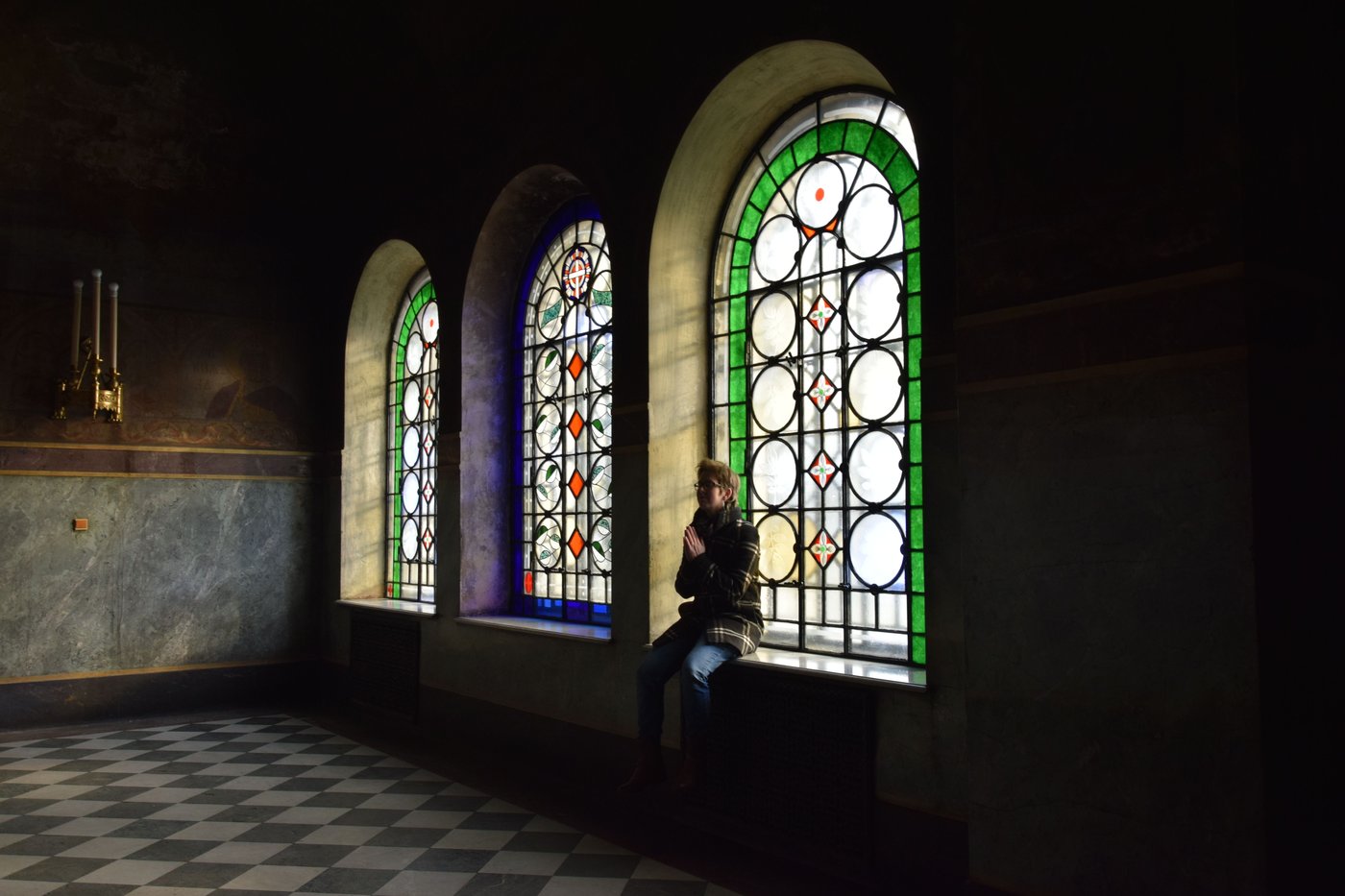
You can also pray the Hours at home, with a parish group, or wherever you can find a little space in your day. Work, study, raising children, caring for a relative, and the routines of retirement all give a different shape to that day. A regular time for prayer can become part of each.
You are welcome to begin, even if this way of praying is entirely new to you. The Church particularly encourages lay participation in Morning and Evening Prayer. That invitation does not place you under the daily obligations that apply to clergy or particular religious communities. USCCB: Evening Prayer
The shape of an Hour
An “Hour” means an appointed time of prayer, not necessarily sixty minutes. Morning and Evening Prayer follow a recurring order:
- An opening and hymn.
- Psalms and a biblical canticle, with short refrains called antiphons.
- A short Scripture reading and response.
- A Gospel canticle, either Zechariah’s song in the morning or Mary’s song in the evening.
- Intercessions, the Lord’s Prayer, and a concluding prayer.
This familiar order holds together texts that change with the day, season, or feast. A prayer book, website, or app supplies the words to follow. General Instruction, 37–54
Find a way to begin
Choose Morning Prayer or Evening Prayer and give it a dependable place in your day. You might pray before leaving for work, after taking the children to school, or after the evening meal. Choose a time that fits your responsibilities.
A website or app that presents the day’s texts in order can make the beginning easier. Audio can help you hear the pace and learn unfamiliar responses. Choose one resource from the list below and stay with it long enough to become familiar with the pattern.
Let the words have time to register. Some will fit your circumstances closely, while others may speak more directly for someone suffering, grieving, or giving thanks elsewhere. Praying with the Church makes room for those people too.
You do not need to adopt a monastery’s entire timetable. If you miss your chosen prayer, return at the next opportunity. If you are an oblate or belong to another community with a particular prayer commitment, follow its guidance.
Resources for beginning
- Understand the prayer: The USCCB introduction explains the Hours and their place in the Church’s life. Free.
- Read and pray along: DivineOffice.org provides daily texts and audio following the United States liturgical calendar. Its website and app are free and supported by donations.
- Pray online or with an app: Universalis offers free daily web texts. Its apps have paid purchase or subscription options and free trials, with spoken audio available by additional subscription. The free website uses its own psalm translation. The apps use Grail psalms and, for the U.S. Hours, RSV Scripture readings. The wording is not identical to the official U.S. printed books. Translation details
- Explore a monastic prayer book: Benedictine Daily Prayer is an abridged monastic breviary for praying the Hours. The second edition is available through booksellers. Liturgical Press lists the third edition for preorder, with publication scheduled for December 1, 2026. Paid print resource.
As the pattern becomes familiar, a printed prayer book or participation in a local community’s prayer may help you continue.
Rule quotations follow Brian Junyor’s reading edition, Ordinary Things Press (2026), licensed under CC BY 4.0.